The Polonaise in A-flat major, Op. 53for solo piano, was written by Frédéric Chopin in 1842.
“The polonaise features many difficult technical aspects, including:
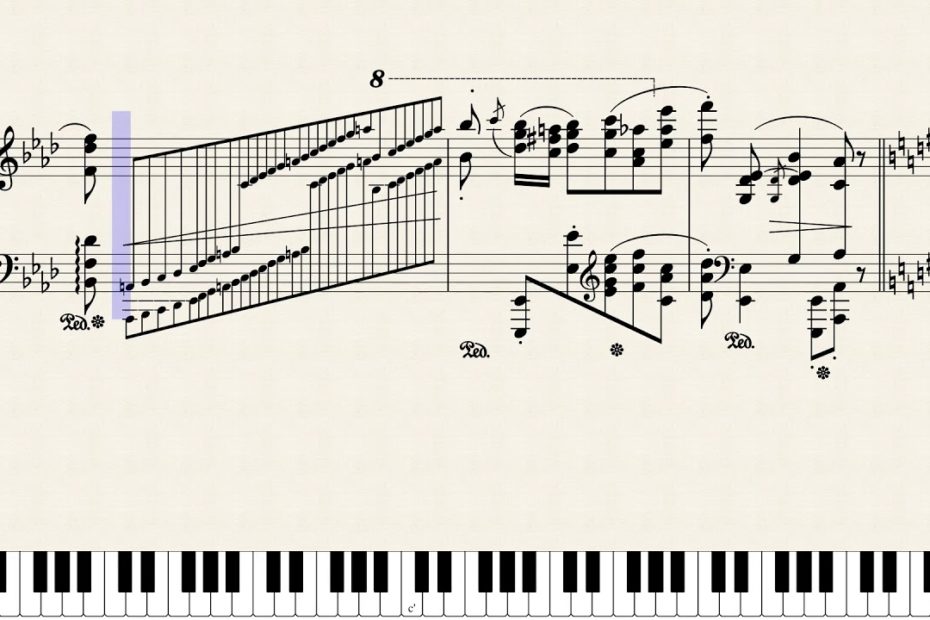
Fast ascending chromatic perfect fourths
Rapid, difficult octave scaling
Trills with the weaker fingers
Quick scales
Fast arpeggios
Broken chords
Chords with wide fingering
Use of a wide range of the piano keyboard.
The piece features a grand introduction with fast ascending chromatic notes in both hands, setting the mood of the piece; also, it shows the heroic side of Chopin’s art. The first theme is a dance-like theme and in the tonic key of A-flat major. It is the familiar part of the piece and has the left hand moving in pounding octaves. The theme is repeated up an octave with short trills that fill some of the auditory gaps in the theme. The first interlude presents a series of chord progressions that lead into a recount of the traditional polonaise melody, with the polonaise rhythm employed in the left-hand accompaniment. The main theme then repeats once more. The second, main interlude (or trio section) opens with six loud arpeggio chords before switching to a very soft bass ostinato of descending octaves first in the key of E major and then in E-flat major (written as D-sharp major). A march-like melody follows the descending octaves and this occurs twice, and then a long lyrical interlude firstly with harmonic chord progressions and frequent modulations. This ends in a descending passage before the main theme is replayed. The theme is played louder and more dramatically and ends in a coda including material derived from the main theme. A typical performance of the polonaise lasts seven minutes.The piece is written in a 3/4 time marking but includes many implicit deviations from it.
Sheet music made with MuseScore – https://musescore.com